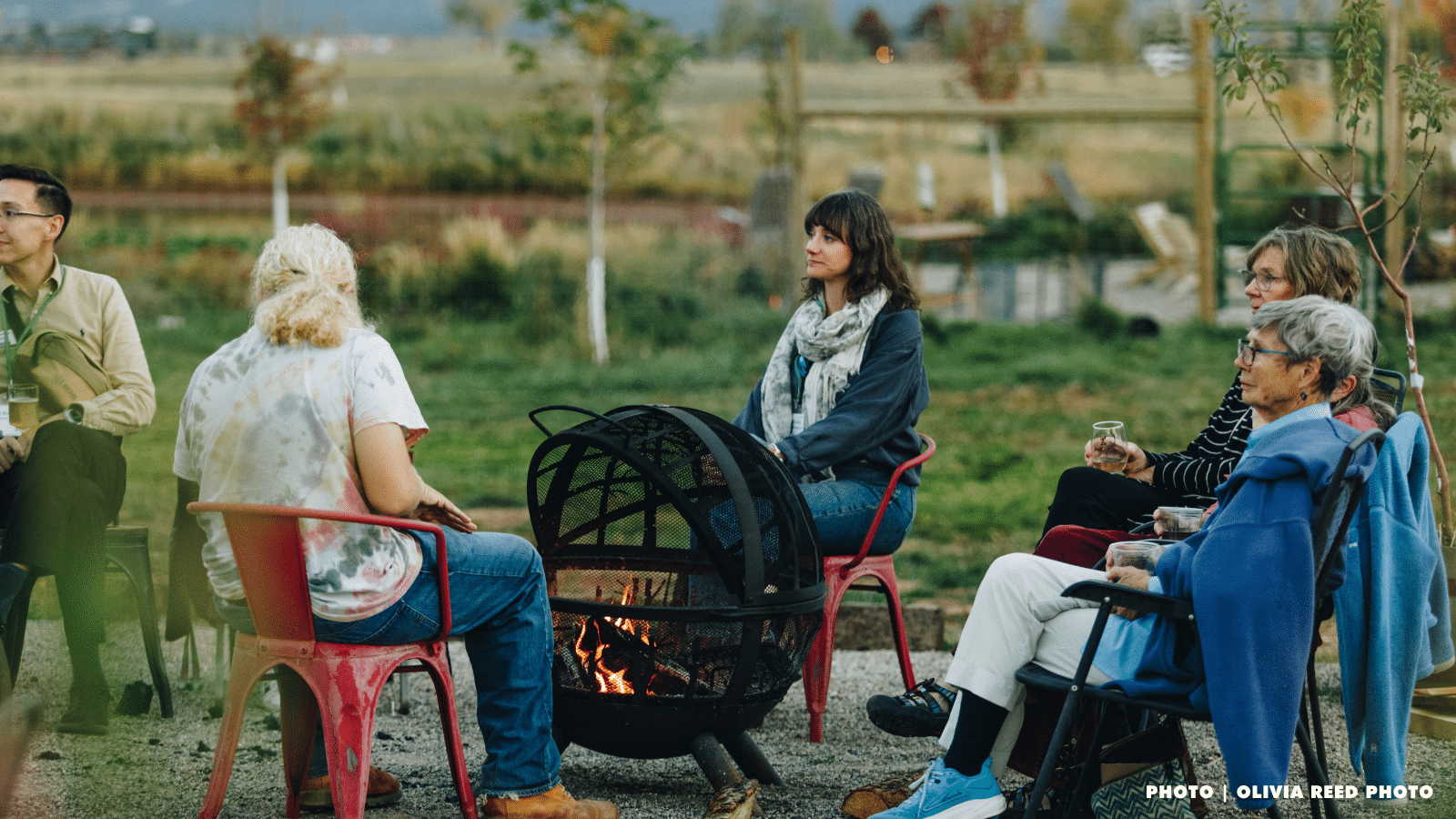
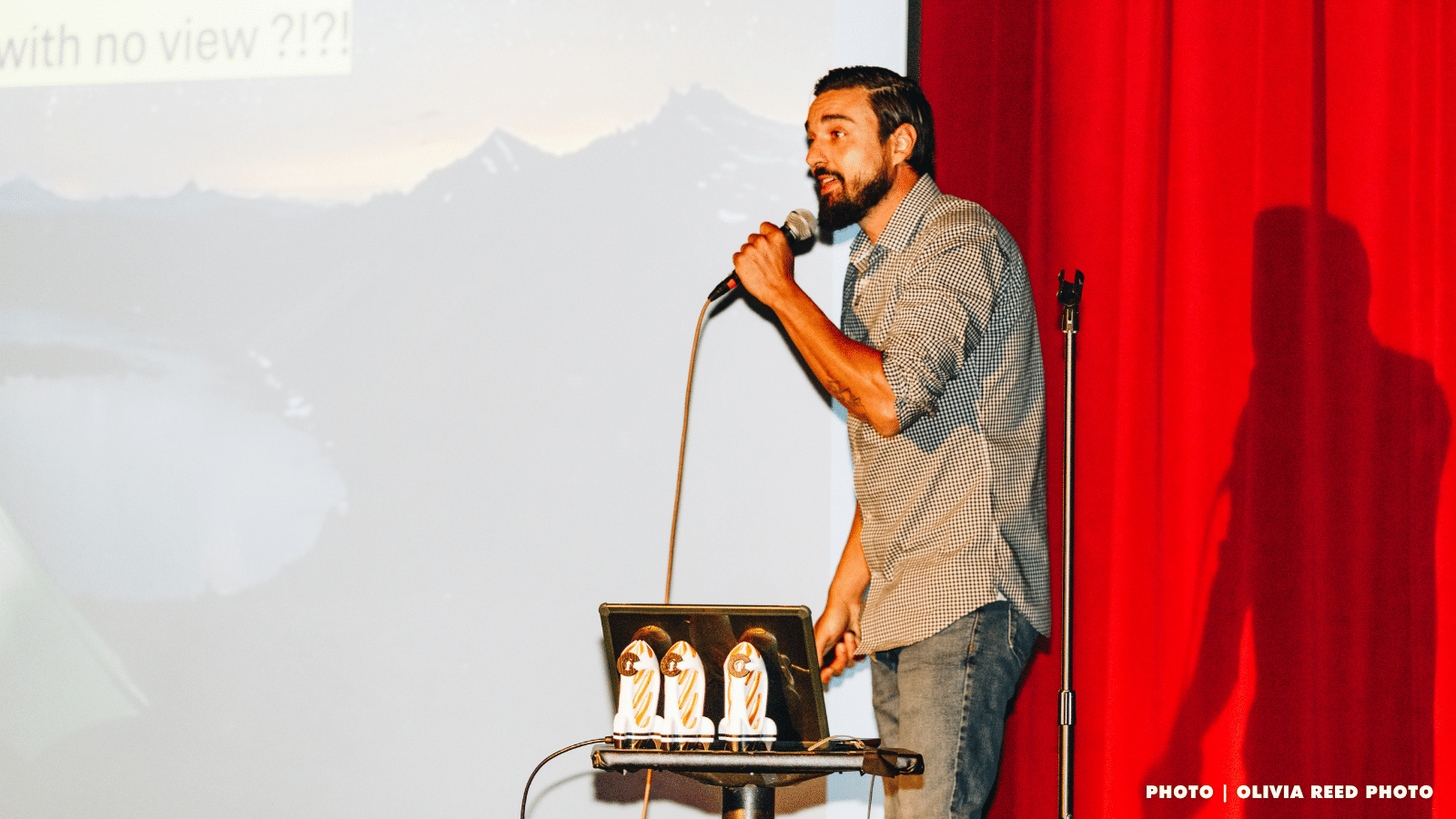
When we connected with Joe Bissonnette, founder of Sky View Tents and winner of the Startup Colorado Pitch Competition, he was calling from inside one of his own tents. He was camping, and not just for fun. Joe was in Oregon in December—the wettest and coldest place he could find—running a field test to push his latest model to its limits and hunt for any sign of a leak.
Based in rural Buena Vista, Colorado, Sky View Tents are designed for stargazers, combining an ultra-clear bug mesh with a patent-pending internal rain fly. That innovative design—paired with a strong business plan and impressive core team—helped elevate the company at the flagship pitch competition. As a result, Joe received a $10,000 matching contribution toward an interest-free loan campaign, along with investor introductions and guidance from national experts to support the company’s growth.
Today, Sky View Tents is on track for another year as the company brings a truly disruptive product to the outdoor recreation market.
A tent for stargazing — how had no one thought of this?
Joe was struck by the idea while camping in Mexico with his fiancée. He realized no tent offered both an open view of the night sky and a quick way to seal off inclement weather. That gap became the spark for his innovative design.
Since launching in 2023, Joe has been refining his design and conducting tests similar to his latest in Oregon.
“What’s really cool is I actually found something,” Joe said of the field test. “Where our pockets are sewn into the tent, it leaks.” He explained that once he’s back home—and warmed up and dried off—he plans to move the pockets, fix the leaks, and make the tent virtually bomb-proof against rainstorms.
With a background in engineering, Joe brings a methodical approach to problem-solving that has guided every stage of building his company. After settling on the tent concept, he began by identifying potential roadblocks, starting with a patent search for his internal rain fly design. When no existing patent surfaced, he moved forward, drawing on his experience at Hitachi Energy to create detailed CAD drawings of the tent structure.
The project was moving along smoothly until he hit an impasse: he didn’t know how to sew—at least not well enough to build a tent. After unsuccessfully trying to source talent within the local community, Joe turned to a prototype expert in Colorado Springs to cut and sew the pieces. While the design itself worked well, he soon discovered that the materials did not.
“It started with a clear plastic tent, and because it was plastic, it was already waterproof. [But] it was super stuffy, and it was [hyperbolically] 1,000 pounds, and it was not durable at all,” Joe said.
Eventually, he found a mesh material specifically designed for clarity, and better yet, it was even clearer than the best plastic.

A viral moment leads to rapid growth
By early 2025, Sky View Tents were on the market and sales were picking up, especially among local customers who leaned into the local brand. As word spread, friends and neighbors bought the stargazing tents in droves—even during the off-season. Demand grew so quickly that he struggled to keep up.
However, after that initial surge of local orders slowed, Joe said it was “crickets for a couple months in February and in March,” a period when he was nearly out of money and increasingly uncertain about the company’s future. “And then we, all of a sudden, went viral on the internet and all these articles started popping up about us,” Joe said.
The sudden turnaround was driven in part by a strategic media push from his fractional CMO, who landed Sky View Tents in The Wall Street Journal as part of a story on rising tariffs and their impact on small businesses. While the coverage wasn’t product-focused, it brought national attention to the small-town company.
Soon after, Sky View Tents began appearing in outdoor publications and gear review outlets. As visibility grew, so did the business and a need to scale. At the time, Joe was already in talks with Ark Angels, a group of local investors who had committed to covering half of the capital he needed. To keep the business moving forward, he still had to secure the remaining funds.
How the Startup Colorado Pitch Competition lead to new growth
Enter the Startup Colorado Pitch Competition at West Slope Startup Week, an event dedicated to elevating rural founders and proving that bold ideas and scalable businesses are being built in every corner of the state. Since 2024, Startup Colorado has hosted three pitch competitions—including the event at West Slope Startup Week—which has connected founders with over $1 million in capital along with meaningful investor and advisor relations.
Joe joined founders from across the state to pitch Sky View Tents, ultimately earning his business a $10,000 matching contribution towards an interest-free loan campaign and a valued $1,500 in a Startup Colorado Board Advisor Session. As a result of the event, Joe was also connected with Energize Colorado and the Colorado Housing and Finance Authority (CHFA) to explore additional funding opportunities.
His meeting with the Startup Colorado Advisory Board delivered exactly what he had hoped for.
The advisory board is curated around three specific challenges the founder wants expert guidance on. Each session brings decades of experience and subject-matter expertise tailored to the company’s industry and growth strategy. In Joe’s case, the board included advisors from the World Trade Center and seasoned import–export practitioners.
The conversation surfaced blind spots he hadn’t fully considered, including whether to sell through Amazon (the advisors cautioned against it), whether to pursue international customers at this stage (they recommended staying focused on local sales), and how to better diversify overseas manufacturing to reduce risk. While Joe had initially hoped to manufacture in Colorado, the lack of sewing talent and infrastructure made the decision unrealistic.

He said one of the most valuable pieces of advice he received was to narrow his sales focus, not just to the U.S., but state by state. He knows Colorado’s market best, the advisors noted, so it makes sense to grow sales there first. Once that foundation is solid, he can expand into neighboring states like Utah. The approach helps avoid spreading resources too thin while building a deeper understanding of each market.
“And so it was some real sanity checks from some really successful people that I want to be like someday. So I take their advice seriously. It was, it was really, it was a really beneficial session,” Bissonnette said. “I really value their time and thoughtfulness in giving their advice, because it’s super useful.”
No one scales alone
Sky View Tents is a reminder that while founders do the hard work of building, no one scales alone. Joe’s perseverance, vision, and technical rigor were matched by an ecosystem that showed up when it mattered most. Working with the Ark Angels—a uniquely strong local angel network in Chaffee County—provided early belief and momentum. Engaging with organizations like Startup Colorado and BEN in an advisory capacity added strategic clarity, expanded perspective, and accelerated problem-solving. This kind of coordinated support doesn’t just help companies survive; it helps them scale smarter, faster, and with fewer unnecessary setbacks.
And if you’re a founder building a business in rural Colorado, you don’t have to wait for a pitch competition to plug in. Startup Colorado offers programs, advisory support, and connections year-round, designed to meet founders where they are and help them move forward with intention. We encourage you to reach out, explore what’s available, and tap into the ecosystem that’s here to support you.
Written by Jennaye Derge

Join us in empowering rural entrepreneurs and ecosystem builders to achieve even more in 2025. Contributions of any amount directly power our mission to build a sustainable statewide network of resources supporting rural entrepreneurs, so that people and places can thrive and chart their own futures! Will you help us?