

Margaret Hedderman, Director of Communications at Startup Colorado, recently attended the ChangeNOW conference in Paris. Here she shares her top takeaways and insights for Colorado’s rural entrepreneurs.
What does a global climate solutions conference in Paris have to do with entrepreneurs in rural Colorado? Two things.
Thing One: While global warming is expected to exceed 1.5° C above pre-industrial levels, and people everywhere are currently and will continue to experience the impacts of climate change, there remains a small window of opportunity to prevent further planetary destabilization.
Thing Two: Innovative, life-savings solutions can come in any shape, any size, and originate from anywhere. Launching and funding them at scale and at pace is a competitive opportunity that belongs to business leaders everywhere, from Paris to Peru… to rural Colorado.
Earlier this month, I attended ChangeNOW at the Grand Palais in Paris, alongside 40,000 entrepreneurs, business leaders, investors, economists, and policy makers from 140 different countries.
Imagine a microcity for entrepreneurs, sprawled beneath the sparkling glass dome of a 19th Century exhibition hall. Hundreds of startups. A pitch stage on a real grass lawn. Investor meeting areas. Live art. A finance circus. And (critically) low-carbon roasted and sustainably sourced espresso.
ChangeNOW also marked the 10-year anniversary of the Paris Climate Agreement coming into effect.
And it’s no news that we are struggling to meet those ambitious goals and commitments. In his opening remarks, Johan Rockström, Director at the Potsdam Institute for Climate Impact Research, delivered a sobering overview of where we stand in 2026.
Seven of the nine planetary boundaries—critical Earth-system processes in which humanity can safely function—have been crossed. These include climate change, biodiversity loss, and freshwater change. As an international conference, at least one of those boundaries hit home to everyone present.
Like Colorado, many of the countries represented had just experienced an abnormally warm winter, and were now facing another hot summer. The consequences of inaction were visceral, immediate.
And yet, the vibe was not doom and gloom. It was practical, sleeves rolled up, down to business. It was urgent. It was ambitious.

Discussions explored proven solutions across industries and business models; and, importantly, the mindset and behavioral changes needed to implement them at scale. Corporate sustainability leaders shared their strategies (and, yes, ongoing challenges) to ensure competitiveness and resilience in a rapidly changing business landscape. And impact investors and economists alike called for an immediate shift in the status quo: for every $1 spent on nature-positive activities, $30 is spent on nature-harming ones.
A Pitch for Every Problem
Across three days, founders pitched a breadth of businesses across industries and stages. Wildfire prediction using space-based sensors. Chemical-free sewage treatment with earth worms. Home décor crafted from South African landfill waste. The sessions followed the event’s focus on planetary boundaries, and were thematically grouped around biodiversity, ocean and water, and the circular economy, among others.
The density and diversity of startups (and investors) demonstrated an encouraging momentum in business-led environmental action—despite the resurgence of climate denial and the corresponding “greenhushing” trend. Many of the solutions were rooted in localized challenges.
The sewage treatment product, for example, was developed to address India’s immediate need for clean drinking water. Others addressed broad global challenges like biodiversity loss or deforestation through high concept initiatives like nature-based finance.
In fact, I was reminded of many startups launching and scaling in rural Colorado right now. (I’m looking at you, Lauren Czaplicki of Fungal Solutions, Eric Amyot of issho, John Armstrong of Onalytics.) While rural entrepreneurship can be isolating for any number of reasons—those working in climate and environmental solutions perhaps even more so—ChangeNOW was a hearty reminder that founders in our network are not alone.
Sustainability PLUS Resilience
Even for businesses not directly working in climate innovation, the imperative to implement sustainability measures is urgent. Corporate sustainability, when done well, can increase:
- profitability by up to 21%
- and financial valuation by up to 36%,
according to a new report that analyzed 600+ academic and think-tank studies. Another 2025 study showed that products with sustainability certifications performed 13% better on platforms like Amazon. (Of course, it’s important to back those green claims up with actual proof.)
In response to the growing cost of climate hazards, potentially $560-610 billion in annual fixed asset losses for publicly listed companies by 2035, the conversation has grown to encompass the need for resilience strategies.
This involves studying risks to your direct operational costs (such as wildfire risk to infrastructure), potential supply chain disruptions due to climate hazards in other parts of the world, and how your business operations impact employees and community members throughout the value chain.
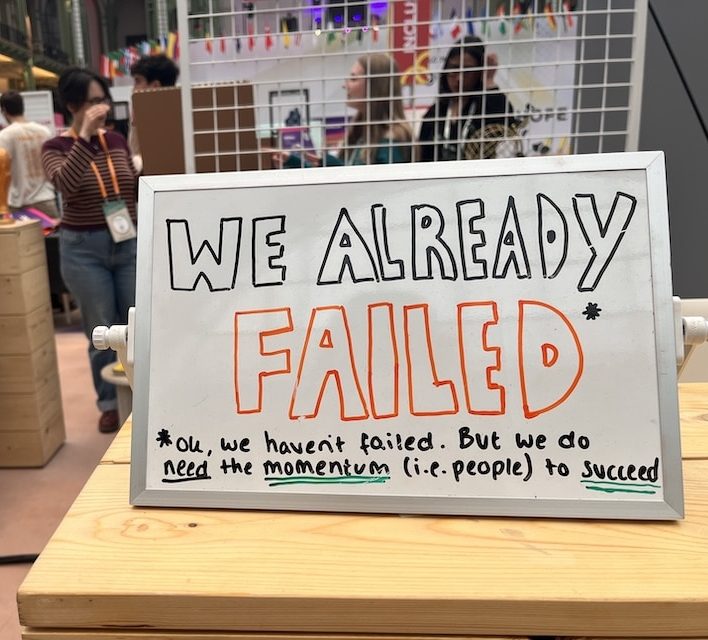
Rural founders are potentially more vulnerable to climate hazards—whether that’s through direct exposure or due to homogeneous and less resilient local economies—and must start including climate risk in their business plans. And for those seeking funding, investors are increasingly studying a company’s climate risk and tipping point exposure.
An Opportunity for Rural Colorado
So, I’ll ask again, how does all of this tie back to rural Colorado?
Despite losing over half a billion dollars in federal clean energy grants, Colorado is seen as a leader in clean energy development and climate tech startups. Rural founders have the opportunity to lean into that momentum—much of which is concentrated on the Front Range near the national laboratories and research institutes—as well as generate some of their own.
A while back, I spoke with Bryn Rees, Co-Principal Investigator at the NSF Ascend Engine in Colorado and Wyoming, about emergent opportunities for founders working in climate and environmental innovation. He said our state is primo for startup solutions in wildfire mitigation, water conservation and quality, soil health, and air quality. Not only is there a direct need to address these challenges in our backyard, there is also a growing demand to support them.
The NSF Ascend Engine works with founders via a targeted accelerator program addressing the above challenges, many of whom are based in rural areas. There are other new opportunities for climate tech founders in Colorado. The Telluride Venture Network is launching a Climate Solutions Investment Bootcamp in June. And on the other side of the state, Boulder Climate Ventures at CU Boulder, funded by Breakthrough Energy, works with graduate students t